
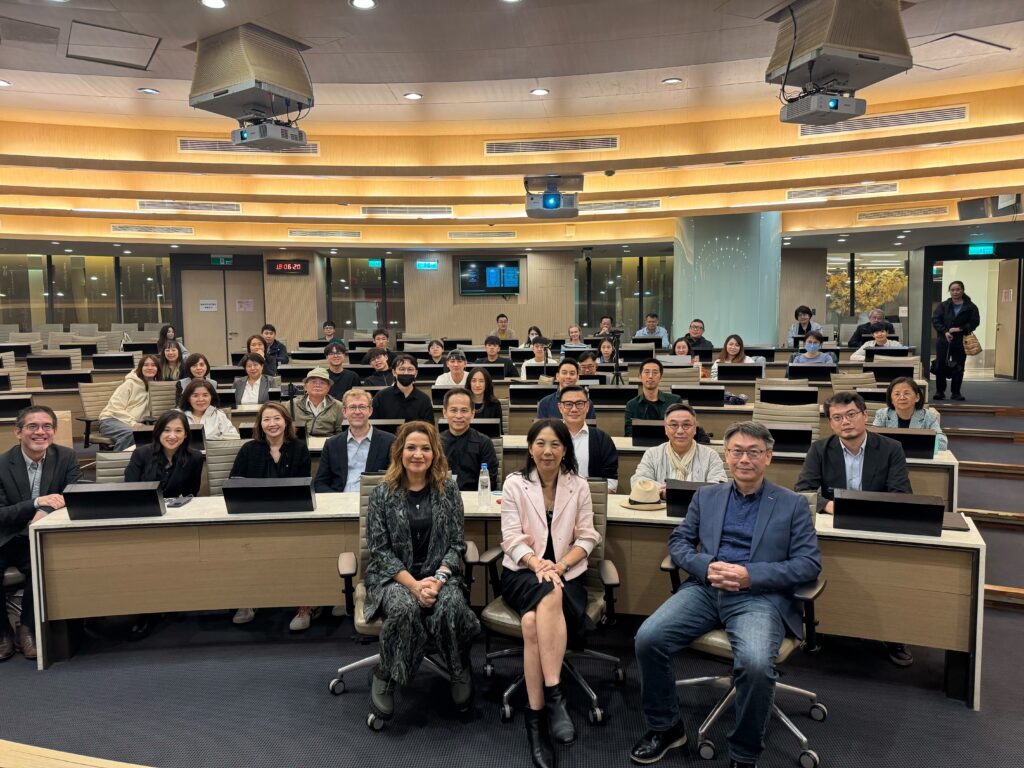
Thank you to everyone who joined us for the AIA Taipei lecture featuring Prof. Lydia Kallipoliti of Columbia GSAPP. Her presentation, “Histories of Ecological Design: An Unfinished Cyclopedia,” offered a rare and deeply insightful journey through the evolution of ecological thinking in architecture—challenging us to reconsider how we design, build, and live within our complex planet.
Throughout the lecture, Prof. Kallipoliti traced the intellectual lineage of ecological design across disciplines, eras, and cultural contexts. From closed-loop environmental experiments to visionary architectural propositions, she revealed the diverse models through which architects, scientists, and theorists have attempted to redefine the relationship between human habitation and the natural world. Her analytical approach—part historical archive, part speculative framework—reminded us that ecological design is not a singular movement, but a continually evolving conversation shaped by crises, technologies, political forces, and imagination.
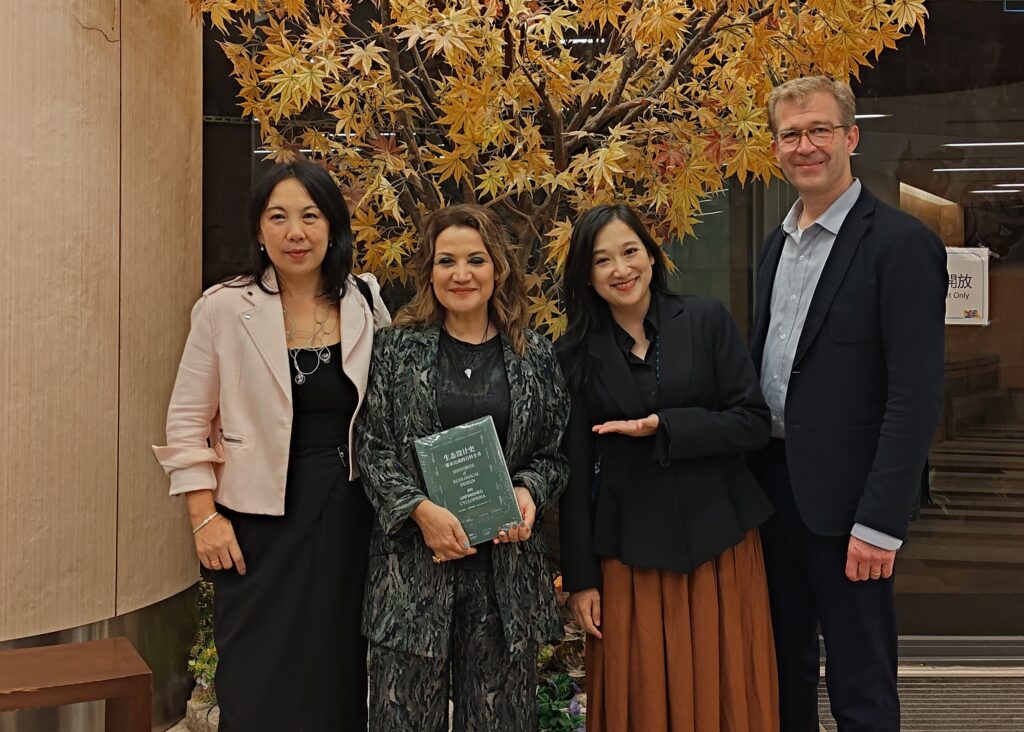
This session also highlighted the urgent need to examine ecological narratives with both critical distance and creative openness. Prof. Kallipoliti encouraged us to question familiar sustainability tropes, to learn from past attempts at environmental integration, and to acknowledge the complex infrastructures that support contemporary life. More importantly, she urged architects and designers to engage with ecological design as an active, unfinished project—one that demands ongoing inquiry, experimentation, and collaboration.
We extend our sincere gratitude to all participants, from the students and emerging designers who brought fresh perspectives and curiosity, to the practitioners who connected theory to real-world challenges. Your presence and thoughtful questions created a dynamic and meaningful dialogue throughout the event.
AIA Taipei remains committed to fostering conversations that expand our understanding of architecture’s role in ecological futures. We will continue to bring forward voices that challenge conventions and inspire new directions for practice, pedagogy, and design culture.
Thank you once again for being part of this important exchange.
We look forward to welcoming you to future events in our lecture series.